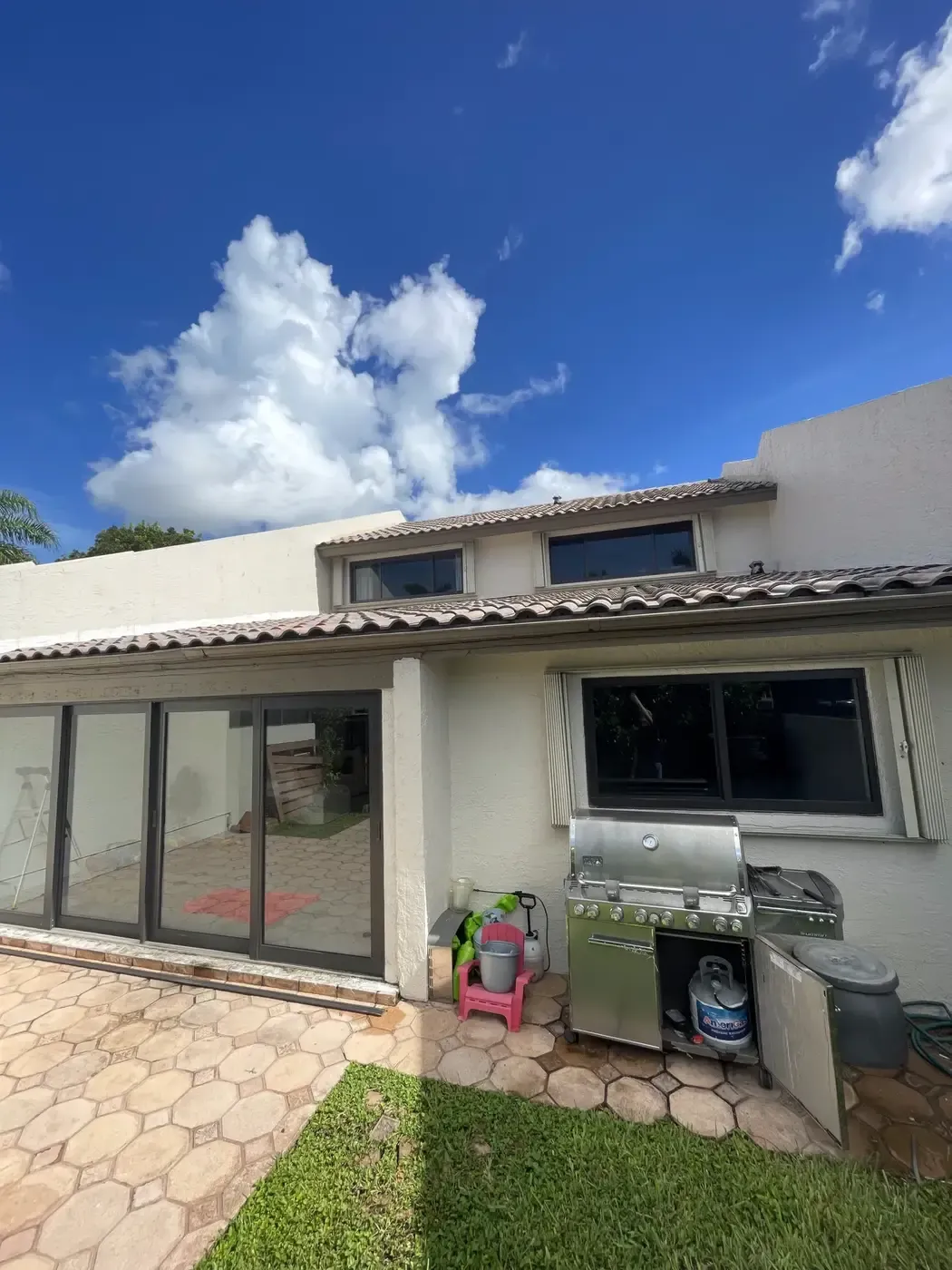
If the budget allows and you plan to stay, impact windows are the better long-term answer, because every opening stays protected without anyone doing a thing before a storm. Shutters make sense when the budget is tight, when you already own good ones, or when your windows are sound and storm protection is all you need. You should know where we stand: we install impact windows and doors, and we have no shutter prices to share.
The real difference is who does the work
Impact glass is already in place when a storm is forecast. Nothing goes up and nothing comes down. A shutter protects an opening only after someone closes it.
So the first question is who closes them, and whether that person can. Hurricane season runs June 1 to November 30. That's six months when a storm watch could land while you're traveling or at work. Some shutters close faster than others, but all of them need someone there. Second-floor openings can mean a ladder, and panels need a place to live the rest of the year.
John M. wrote that he decided to upgrade so he would no longer do the "shutter dance" with each threat. He also wrote that his new windows "filter out some of the outside noise."
When shutters make sense
- The budget won't stretch this year. Shutters on the openings you can't replace yet are a reasonable plan. You can move to impact windows in stages later.
- You already own good shutters. If they fit, work smoothly and you're content to close them, storm protection alone isn't a reason to tear them out.
- Your windows are in good shape. An impact window replaces the whole window. If yours seal well and noise and sun don't bother you, you'd be paying for upgrades you don't need.
- Your association limits the exterior. Rules vary, and the association's documents decide. Read them before you price anything, shutters included.
If that sounds like your house, we will say so at the estimate. Vanessa L. wrote that our team "gave me good advice that actually saved me money."
When impact windows are the better call
- Nobody can count on closing shutters. You travel during the season, the home sits empty part of the year, or climbing a ladder is behind you.
- Your windows need replacing anyway. If they leak, stick or let the heat in, money spent covering them doesn't fix that.
- You have high or hard-to-reach openings. Stairwells and second-floor glass are a pain to cover. Our room-by-room window guide shows which style fits each spot.
- You want something that works on ordinary days. Laminated glass helps cut outside noise, Low-E options help with the sun's heat, and you keep your view. A closed shutter covers the glass too, but few people live behind closed shutters. For the day-to-day side, read how impact windows and doors help with home security.
How to compare the cost
We can't tell you what shutters cost, and we won't guess. Get a written quote from a shutter installer for the same openings, with installation and any permit included. Then set it next to an impact quote for those openings. On the impact side, installed prices look like this:
- Whole home, a typical 3-bedroom, 2-bath with 12 to 18 openings: $15,000 to $45,000
- Standard-size single-hung or horizontal roller window: $1,000 to $2,500 per opening
These are typical South Florida prices as of October 2026, not a quote. Your price depends on size, product and your home, and we'll give you an exact number at the free estimate.
Our guide to impact window costs in Miami goes through the full list. Then add what neither quote shows: the hours you spend closing and opening shutters each time, whether you would pay someone to do it, and where the panels go.
Mixing the two, and what it means for insurance
You don't have to choose once for the whole house. One middle path is to replace the openings that are hardest to cover first, and keep shutters on the rest until the budget catches up. One window is a normal job for us too.
Opening protection is one section of Florida's wind mitigation form, and the final rating reflects the weakest protection found across the openings. A few weak openings can set the result for the house. Upgrades may qualify you for windstorm mitigation discounts, and savings vary by insurer and inspection, so ask your agent how your plan would be treated. Our guide to what a wind mitigation inspection does explains the form.
Plan the timing
If you lean toward impact windows, leave room on the calendar. Signed contract to final inspection usually takes about 2 to 4 months, longer in late summer. Read getting impact windows ready for storm season to plan around that.
Try the shutter test
Pick a calm Saturday and close every shutter you own, start to finish. If you don't own any, walk the house and think through each opening. Time it. Note who had to help and what you couldn't reach.
If it goes smoothly and your windows are sound, keep the shutters and spend the money somewhere else. If it takes most of the day or you can't do it alone, that tells you more than any salesperson could, ours included.
Whichever you choose, ask for the approval paperwork and look the product up in Florida's product approval search. No window is hurricane-proof, so tested and approved is the standard to hold any product to. Our impact windows page explains how they're built and how to check an approval yourself.
Ready to protect your home?