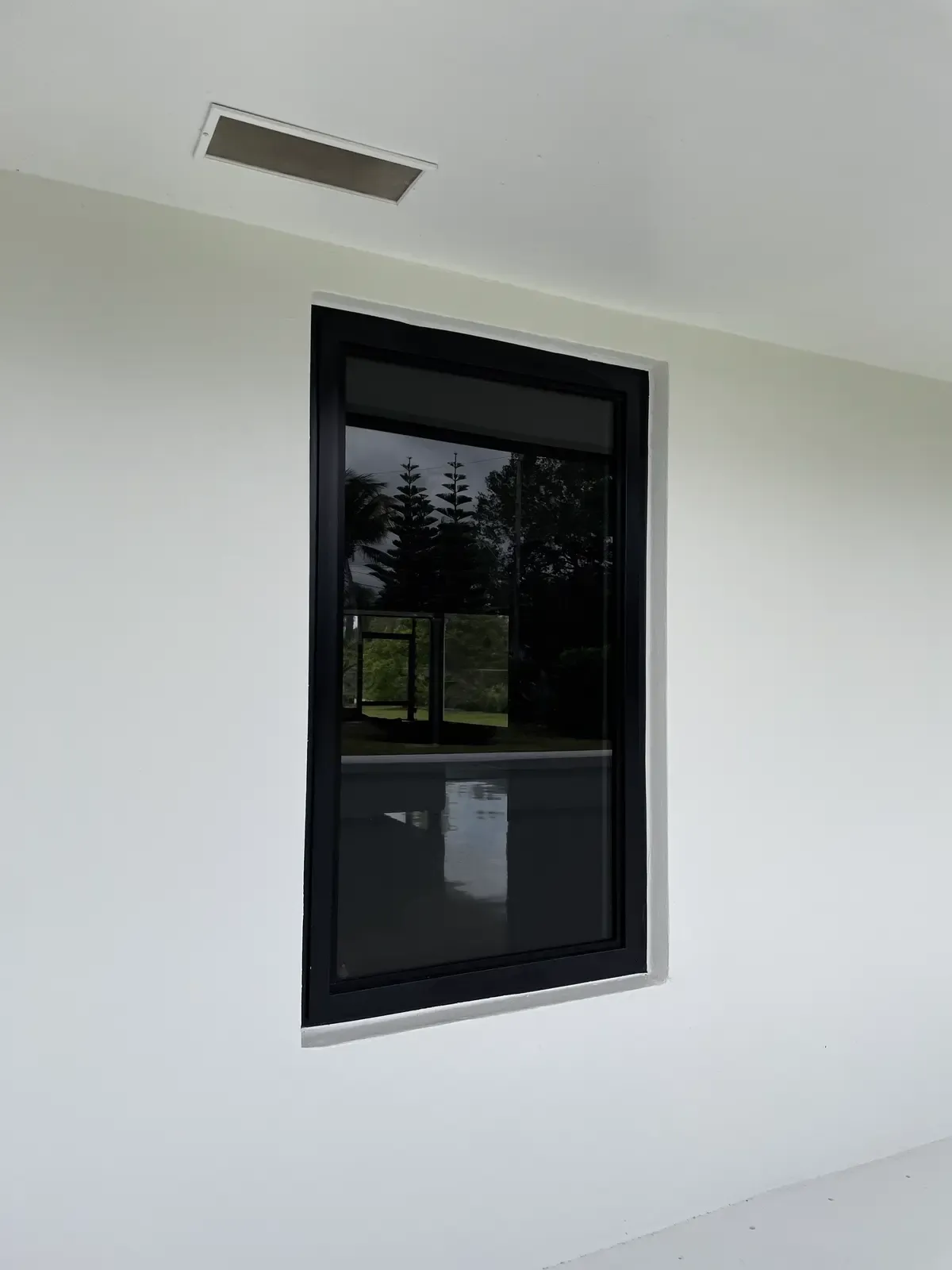
Kitchens usually get a casement, bedrooms a casement or single-hung sized to work as an emergency exit, living rooms a large fixed window with an operating window beside it, bathrooms a small casement or roller, and stairwells a fixed window. Many homes end up with a mix of all four, and that's fine.
Three things decide each opening: its shape, what sits right outside it, and whether you can reach it. A window taller than it is wide leans single-hung. One wider than it is tall leans horizontal roller. A panel that swings out needs clear space outside. The window comparison table shows the four styles side by side.
Kitchen
Start with the window over the sink. You're leaning across a counter, and often one hand is busy. A casement window suits that spot because you turn a handle instead of lifting a sash. Laminated glass weighs more than ordinary glass, so a single-hung sash over a counter can be a real stretch. A casement also opens the whole panel, which helps when the stove is on.
Then go outside and look. If the kitchen backs onto a side path that people use, an open casement will be in the way. A roller is the better pick there, because it stays inside its frame.
Bedrooms
Bedrooms need an opening big enough to serve as an emergency exit, so start with that instead of looks. A fixed window can't do that job. With a single-hung or a roller, only part of the window opens, so the clear space is smaller than the window looks. A casement opens the whole panel, which gets you more clear space from the same size window. We check this opening by opening when we measure, and you should expect the same from anyone who measures your home.
After that, think about how you use the room. If a bed or dresser sits under the window, a roller set high on the wall gives you light and privacy, as long as the room's exit opening is somewhere else. If the bedroom faces a porch or walkway, a single-hung keeps everything inside the frame.
You do not need to choose a style for noise, because all four use laminated glass. Yesenia G. wrote that "it blocks the noise and it looks great in my house." How much you notice depends on your home and what is outside it.
Living room
This is the room for a large fixed window. With no sash to break up the view, you get more glass and more daylight facing a pool, garden or water. Mike H. wrote that we "did my large picture window installation perfectly."
The catch is air, because a fixed window adds none. If the room has a patio door that opens, fixed glass may be all you need, and our guide to sliding glass or French doors can help with the door. If it doesn't, put a casement beside the fixed glass so you keep the view and still get a breeze. Where an open casement would swing over a pool deck or walkway, use a roller beside it instead.
Bathroom
A bathroom needs a window that opens, and one you can reach. Many are small, set high, or sit over a tub. A casement works well over a tub because a handle is easier to manage than lifting a sash. A small roller set high on the wall works where a swinging panel would land over a walkway. Either way, the height gives you light and privacy at the same time.
Skip fixed glass here unless the room has another window that opens. If you want glass people can't see through, ask what's available for the style you pick, and we'll go over it at the estimate.
Stairwell
A stairwell wants daylight, and a tall opening is usually out of arm's reach, so fixed glass is the usual answer. You pass through this space instead of living in it, so it rarely needs airflow of its own.
The outside of a fixed panel gets cleaned from the outside, so picture how you'd get to it on a second floor. And if a landing has a window you can actually reach, a casement there gives you a way to let warm air out of the upper floor.
What the mix costs
A casement has more hardware, so many homeowners put casements where air matters most and use single-hung windows or rollers in the other rooms. Installed prices:
- Standard-size single-hung or horizontal roller window: $1,000 to $2,500 per opening
- Casement window: $1,500 to $3,000 per opening
- Large fixed window: $2,000 to $6,000 or more
These are typical South Florida prices as of October 2026, not a quote. Your price depends on size, product and your home, and we'll give you an exact number at the free estimate.
If you're planning to do every opening at once, read what a whole-home impact window project involves before you settle on a budget.
Walk the house with a notepad
Do this before anyone visits:
- List every opening by room, and note whether it's taller than it is wide or the other way around.
- Go outside and mark any window beside a walkway, patio or pool deck.
- Try the windows you have now. Note any you can't reach or that are hard to lift.
- Star every bedroom, so the exit opening gets checked first.
- Mark the rooms where you want a breeze.
The frame is a separate choice, so read aluminum or vinyl impact window frames next.
Debbie C. wrote that we kept them informed while "choosing the right impact doors and windows for our house." A list like this makes that conversation faster, with us or with anyone else you call.
Ready to protect your home?