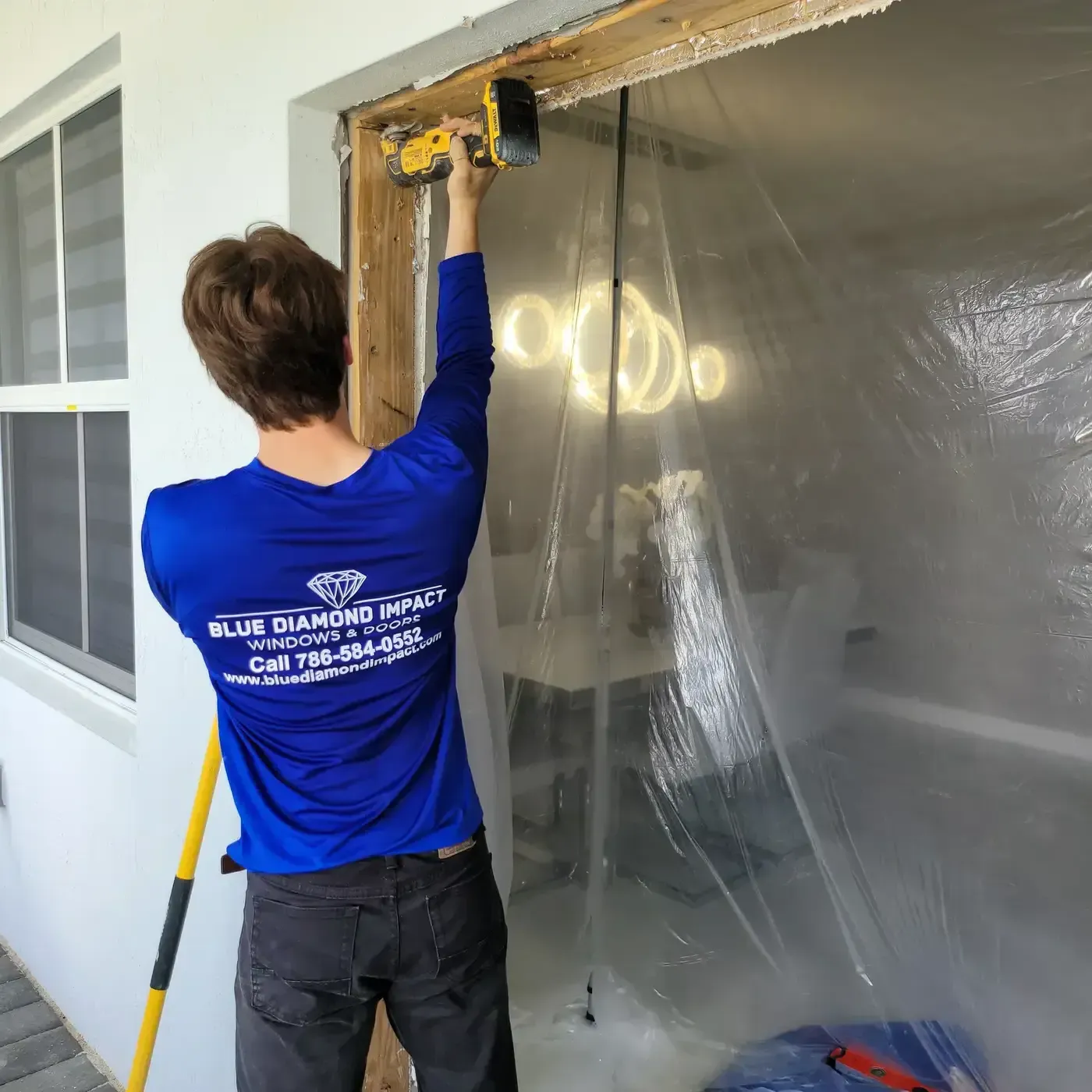
Yes. You can replace one or two windows and leave the rest of the house alone, and we do it. It makes sense when something is failing or when one room is the problem. The catch is insurance: a credit can depend on every opening in the house, so a small job may not change your rating.
Some homeowners assume nobody will take a job this small. Aspen H. had a door slab and a window insert to install and wrote: "Most said the job was too small." That review describes our attitude as "no job too small", and says the crew was "in and out pretty quick". You can read more reviews from homeowners with small or tricky jobs.
One window gets the same treatment as twenty. We measure, permit and install every opening with our own installers, never subcontractors, and the order of work is the one described in what happens on install day.
When a few openings make sense
- Something has failed. A window that leaks, won't lock or has a cracked pane doesn't need to wait for a whole-house budget.
- One room is the problem. If street noise reaches one bedroom, start there. Yesenia G. wrote about a new window: "it blocks the noise and it looks great in my house."
- One opening is the biggest chore to protect. A large window that takes the longest to shutter is a good first candidate.
- Your budget comes in stages. Doing the most important openings now can beat waiting years to do them all.
- You live in a condo. Your unit may have only a few openings, and what you can change isn't only up to you. Rules vary and the association's documents decide, so read our guide to replacing windows in a condo or association first.
When it is not worth it
There are two cases where we'd ask you to think again. If all your windows are the same age and failing the same way, two new ones won't help the next ten, so price the whole house before you decide. And if your main goal is a lower insurance bill, read the insurance section below first.
What one window costs
Prices are per opening and installed, so a small job is easy to ballpark:
- Standard-size single-hung or horizontal roller window: $1,000 to $2,500 per opening
- Casement window: $1,500 to $3,000 per opening
- Large fixed window: $2,000 to $6,000 or more
These are typical South Florida prices as of October 2026, not a quote. Your price depends on size, product and your home, and we'll give you an exact number at the free estimate.
A large picture window is a good place to start. Mike H. wrote that we "did my large picture window installation perfectly." If that sounds like your opening, see our fixed impact windows, or compare every type on the impact windows page. Our guide to what impact windows cost in Miami also covers doors and whole homes.
Why insurance credit can depend on every opening
A wind mitigation inspection uses a state form, OIR-B1-1802. Opening protection is one section of that form, and the final rating reflects the weakest protection found across the openings. Your best window doesn't set that rating. Your weakest opening does.
So two new windows in a house with other unprotected openings may not change that section at all. A home with every opening protected may qualify for insurance credits, and savings vary by insurer and inspection. If insurance is your main reason, ask your agent and an inspector how your current openings rate before you choose what to replace, and whether your doors and garage door count too. Our wind mitigation inspection guide goes deeper, and the state's wind mitigation resources are free to read.
None of this makes a small job a bad idea. A leak, a broken lock or a noisy room is reason enough on its own. Just don't buy two windows counting on a credit to pay for them.
How to phase a project
If you want the whole house done but not all at once, set it up so each step builds on the last.
- Put every opening on one list. At the free estimate, ask us to measure and price the whole house, even if you plan to start with two. You'll have a plan and a number for later. Prices can change between phases, so ask how long the numbers hold.
- Rank the openings. Failing openings go first, then the largest or hardest to protect, then the rest.
- Group phases by wall or floor. A finished side of the house looks better than scattered new windows, and each phase stands as a complete job.
- Write down the look. Record the frame material and color and the glass, so the next phase matches the first.
- Ask about permits early. Ask whether each phase needs its own permit and final inspection. We'll tell you what to expect for your city.
- Keep your current protection. Openings you haven't replaced still need whatever you use today, so hold on to your shutters and hardware until the last phase is in.
- Book ahead. Typically, lead times grow in August, so spring is the time to book an estimate.
Mike H. shows how this looks in real life. After the picture window, the review continues: "I have 4 sets of patio sliders on order and when they arrive I will be using him again." That is a phased project in one sentence: one opening first, a bigger order next, and the same installer for both.
Ready to protect your home?