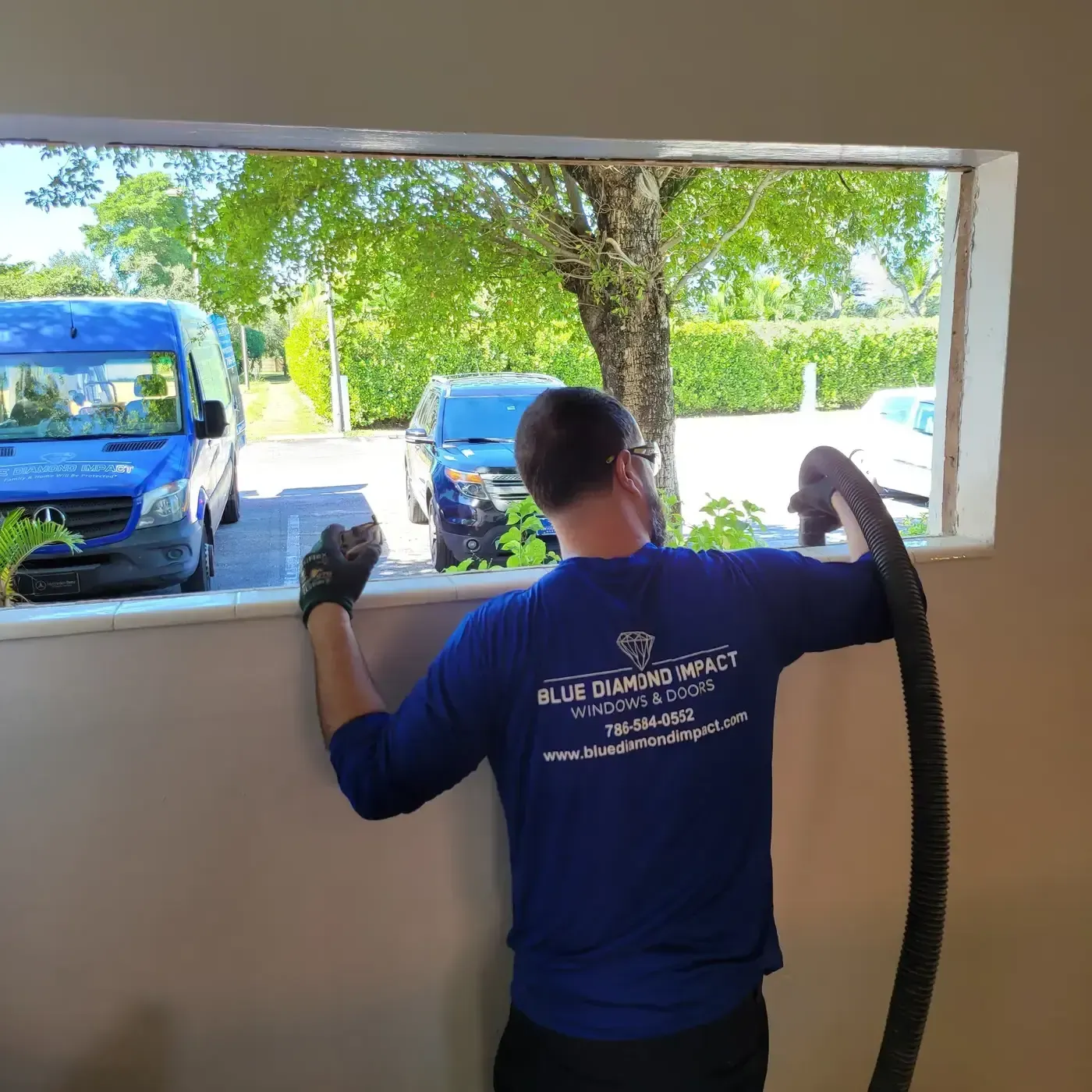
A whole-home impact window project has six stages: the first call, the free estimate, the contract and product choices, the permit and order, installation, and the final inspection. From signed contract to final inspection it typically takes about 2 to 4 months, longer in late summer. Most of those months go to the permit and manufacturing, with the crew in your house for only a small part of them.
Ivanna G., who hired us to replace all the windows at home, summed up the arc in one sentence: "Derek worked with us from the very beginning to take measurements, help us decide on the best product for us, ensure timely delivery and installation, and facilitate the permit process." Here is what each of those steps means for you.
How long each stage takes
These are the numbers to plan around:
- Signed contract to final inspection: typically about 2 to 4 months, longer in late summer
- Permit: usually a few days to a few weeks, depending on the city
- Installation: typically 1 to 3 days for most homes, longer for large whole-home jobs
Typically, lead times grow in August, so spring is the time to book an estimate. Our guide on when to book impact windows goes through the calendar, and if you're reading this late in the year, start with planning next year's project after the season.
First call and free estimate
The first call is short: what you want replaced, where the house is and whether you have an HOA. Then we come out for the free in-home estimate, with no pressure and no upselling. We measure, look at every opening and talk through the options.
On a whole house, give that visit real time. Destiny S. wrote that one of our team "spent nearly 3 hours explaining the products." Before we arrive, walk the house with a notepad and list every opening by room. Mark the ones that leak, stick or will not lock. That list makes any estimate faster and any two quotes easier to compare.
Choosing products opening by opening
You don't need the same window in every room. A house can mix different impact windows: fixed, casement, single-hung and horizontal roller, chosen by what each space needs.
A few choices are worth making once for the whole house so the rooms match: frame material (aluminum or vinyl), glass (laminated or insulated) and Low-E options. Bedrooms need their own look. Each one needs an opening big enough to serve as an emergency exit, so a window that doesn't open can't be the only answer there.
Contract, permit and order
Once you sign, we handle the permit and the order. If you have an HOA, plan for board approval in this stretch too. We provide specs for the board, as Captiva O. noted: "provided specs for me to submit to my HOA board."
Manufacturing takes the most patience. John M. wrote: "Jonathan told me there would be a few months lead time for manufacturing, once the order was in they knocked it out in no time." This is the quiet stretch of the project, when nothing seems to be happening at the house. Ask who will keep you posted and how often.
What it costs
For budgeting, this is the range for a typical house:
- Whole home, a typical 3-bedroom, 2-bath with 12 to 18 openings: $15,000 to $45,000
These are typical South Florida prices as of October 2026, not a quote. Your price depends on size, product and your home, and we'll give you an exact number at the free estimate.
The range is wide because the job is the sum of its openings. Twelve standard windows and eighteen openings with large fixed glass are very different projects. Our guide to what impact windows cost in Miami shows the price by opening type. If your project includes doors, ask to see them on their own lines, because door pricing varies more than window pricing.
Installation
Installation is the shortest stage and the one you'll feel most. Our own installers work through the house opening by opening, taking out each old unit and setting the new one. Plan for someone to be home, for noise during the day and for rooms you can't use while the crew is in them. If someone works from home or sleeps during the day, tell us up front so we can plan the order of rooms.
Ivanna G. wrote that the crew "went out of their way to minimize disruptions while they installed". Our article on what happens on install day has the checklist for getting each room ready.
Expect a bump or two on a project this size. The same review is honest about that: "Like any major home improvement project, there were minor hiccups but Derek went out of his way to keep us informed of timelines." A delivery can slip or an inspection date can move. What you should judge is how fast you hear about it.
Final inspection and what to keep
The project ends at the final inspection, not at the last window. Max L. wrote that we "walked it all the way through inspection." Stay reachable that week in case someone needs to get inside.
Once it passes, put these in one folder. You'll want them for your insurance agent and on the day you sell:
- The signed contract and the list of products, opening by opening.
- The permit and the final inspection record.
- The Miami-Dade Notice of Acceptance (NOA) for each product, which names the product, what it was tested to and when the approval expires.
- Any wind mitigation report. Ask your agent whether a new inspection makes sense, since a home with upgraded openings may qualify for insurance credits, and savings vary by insurer and inspection.
Ready to protect your home?