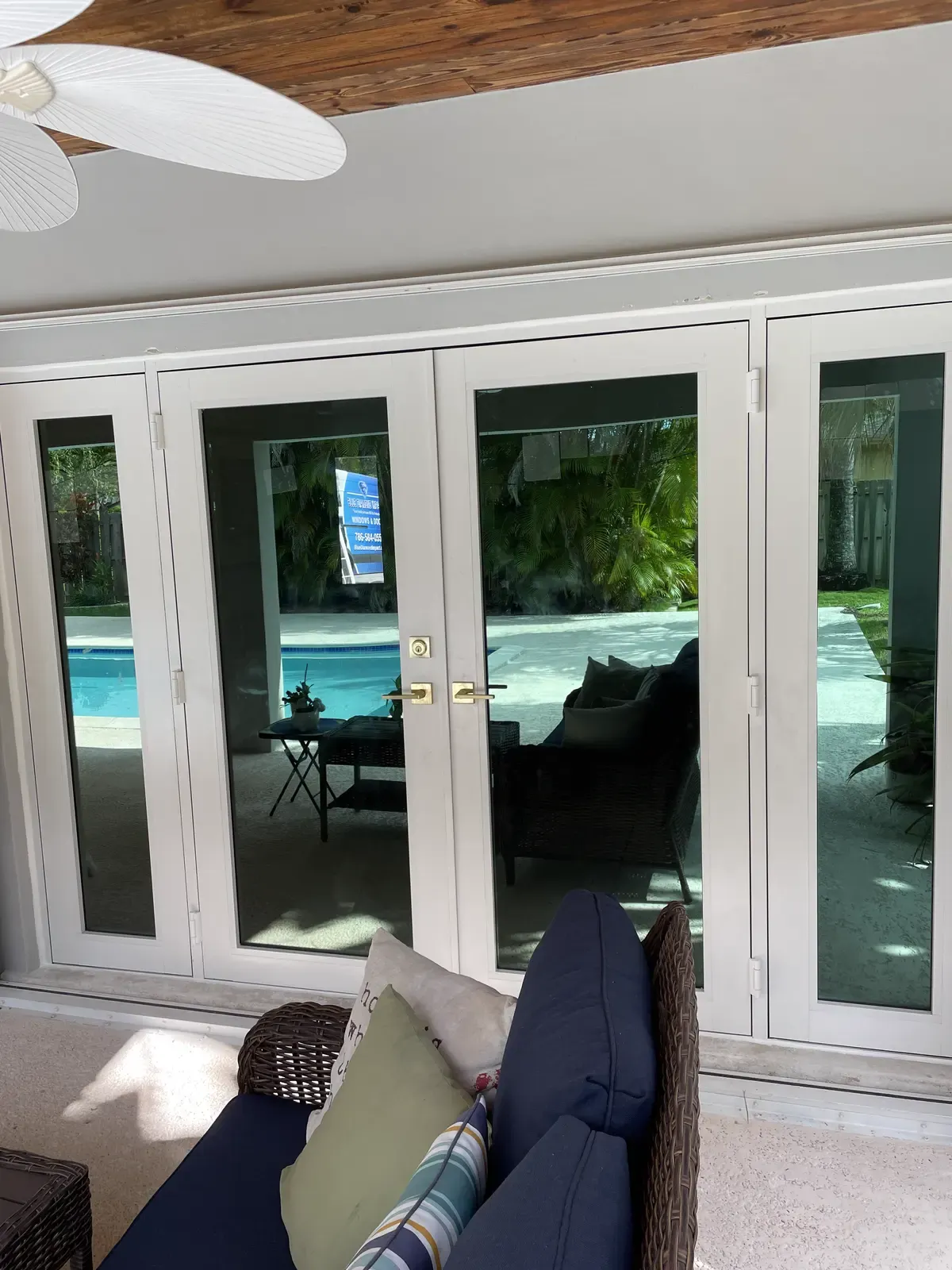
Near salt air, caring for impact windows means rinsing salt off with fresh water, keeping tracks and hardware clean, looking after the seals and staying away from harsh products. None of it is hard. Follow the manufacturer's care instructions first, because they're written for your exact product, and treat this article as the plain-English version.
You won't find a schedule here, and that's on purpose. How often a home needs this depends on how close it sits to the water, which way the wind hits it and what the manufacturer says. A set calendar would be too much for one house and too little for another. This is routine care. The pass you make before the season, with locks and closing panels, is in getting impact windows ready for storm season.
How to tell it's time
Salt builds up slowly, and you'll usually feel it before you see it. Run a clean finger along the frame or the glass on the side that faces the water. If it feels gritty or leaves a film, it's time for a rinse. A slider that's starting to drag is another sign. So is a storm or a long windy stretch, which can leave a coat of salt and sand on everything outside.
Rinsing and washing
Rinse before you wipe. Salt and sand are abrasive, and a dry cloth drags them across the glass.
- Rinse from the top down with fresh water from a garden hose at normal pressure.
- Wash the glass and frame with a soft cloth or sponge and mild soap, unless your instructions say otherwise.
- Rinse again to carry the soap away.
- Dry with a clean, soft cloth to avoid spots.
Before you buy a specialty product, check the instructions. In most cases fresh water and mild soap do the work. For windows you can't reach from the ground, don't climb. Hire a window cleaner and hand over the care instructions.
Tracks
Tracks collect what falls off everything else. That matters most on impact sliding glass doors, where a heavy panel rides on rollers in the track every time someone goes out to the patio. Vacuum first, because water turns sand into paste. Then wipe the track with a damp cloth and dry it. On a horizontal roller window the job is the same on a smaller scale.
Impact French doors have no long track to clean, but their hinges, latches and threshold collect the same salt. That's one of the smaller differences between the two. Sliding glass or French doors covers the bigger ones if you're still choosing.
Hardware
Metal parts are usually where salt shows up first: hinges, handles, latches, locks and rollers. Wipe them with a damp cloth and dry them. Move each handle and lock through its full range while you're there, so you notice early if something feels gritty. Use a lubricant only if the manufacturer names one, and only the one it names, since the wrong product can hold on to sand.
If you see rust spots or pitting, or a lock starts to feel rough, have it looked at instead of spraying something on it.
A door that starts to stick isn't always a dirt problem, either. Alexander P. wrote about "the door expanding with weather, and Jonathan came out right away to fix it." If a clean track and clean hardware don't solve it, stop and call. Forcing it only adds a second problem.
Seals
The rubber or vinyl seals around each panel keep water and air out, and they're softer than everything around them. Wipe them gently with a damp cloth. Don't pull on them, paint them or add caulk. While you're there, look for cracks, flat spots or a seal pulling away from the frame. If you have insulated glass and you see fog between the panes, that's worth a call too.
What not to use
- Pressure washers. They can damage seals and push water where it doesn't belong.
- Steel wool, scouring pads and abrasive powders. They scratch glass and wear down frame finishes.
- Razor blades and metal scrapers on the glass. One pass can leave a mark.
- Solvents and harsh chemical cleaners. Keep them off frames, finishes and seals.
- Grease and oil-based products, unless the instructions name them.
- Caulk or paint over seals or drainage openings.
If your glass has a Low-E coating, check the instructions before you try a new glass cleaner. And if the manufacturer's instructions disagree with anything on this list, the instructions win.
If you live near the water and haven't bought yet
Your frame and its finish decide what care it wants. If you're still choosing, ask to see the care instructions for each product before you buy. It's a fair question, and the answer tells you how much work you're signing up for. Aluminum or vinyl impact window frames walks through that choice.
If you already own your windows and you've lost the instructions, ask your installer which product you have. The product name gets you to the right document. Keep a copy with your other house papers.
Ready to protect your home?