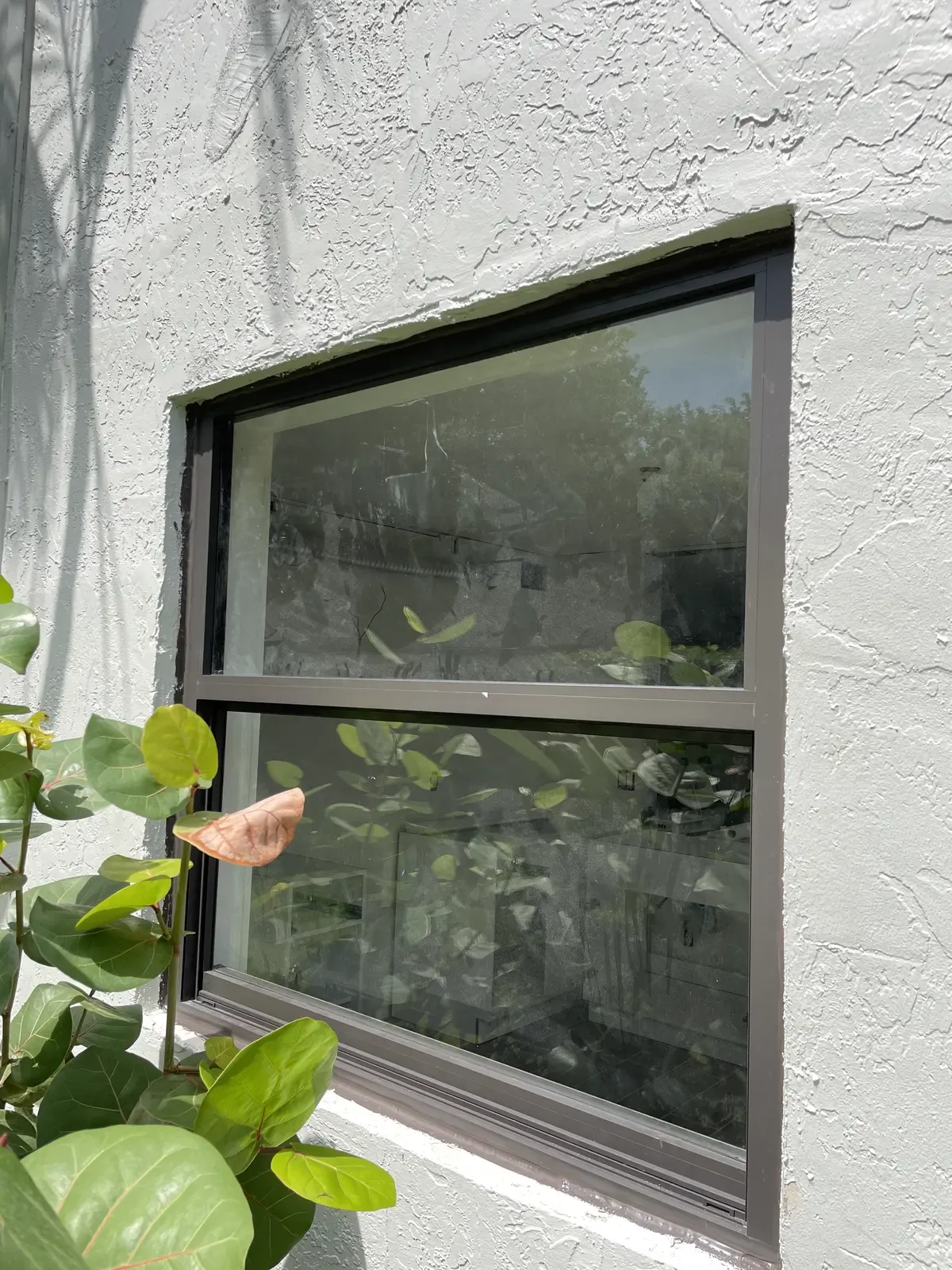
Both frames can do the job. Aluminum is usually the better fit for large openings, narrow frames and dark colors. Vinyl is usually the better fit for standard-size windows, where a frame that carries less heat and has no finish to look after matters more than a slim profile. You don't need one material to win. You need the right frame for each opening.
Start with the approval, not the material
Miami-Dade and Broward are both in the High-Velocity Hurricane Zone, so neither frame gets a pass. Windows approved for the zone go through large-missile impact, static air pressure and cyclic wind pressure testing. Those tests judge the finished window: glass, frame and hardware together. So the claim that one material is stronger doesn't settle much by itself. An approved vinyl window and an approved aluminum window have both been through the same kinds of tests.
What matters is the exact product at the exact size of your opening. Our impact window buying guide shows you how to look up an approval yourself.
Not every style comes in both materials, either. Our single-hung impact windows, for example, are built with thick aluminum framing. We'll tell you which frames are available for each style you're considering.
What aluminum does well
Aluminum is stiff for its weight, and laminated glass is heavy. That means aluminum can carry the glass in a narrower frame, so you see more view and less frame. On a small bathroom window you'd barely notice. On a large window facing the yard, you will.
Color is its other strength. Aluminum takes a factory finish, and our recent jobs include white, black and bronze. If you want a dark frame against light stucco, this is usually where to start.
The trade-offs are heat and finish. Metal moves heat easily, so an aluminum frame in full sun gets warm. Some aluminum windows have a thermal break, a strip of less conductive material inside the frame, and it's worth asking whether the one you're looking at has it. Near the water, the finish is what protects the metal, so it needs regular rinsing, and a deep scratch deserves attention.
What vinyl does well
Vinyl doesn't conduct heat the way metal does, so the frame stays closer to room temperature on a hot afternoon. It can't rust, and there's no coat of finish to chip or pit. Upkeep is mostly soap and water. For a house close to the bay or the beach, that's a real point in its favor.
One caution: locks, rollers and fasteners are still metal, so salt air reaches them too. With either frame, caring for impact windows near salt air takes a simple routine.
The trade-offs are bulk and color. Vinyl is less stiff than aluminum, so the frame has to be wider to hold impact glass, and you get a little less glass in the same opening. Very large sizes may not be available. Color choices tend to be narrower, and a vinyl frame is harder to change later. Vinyl also moves more with temperature, which is one more reason a careful fit matters.
Don't choose a frame for the electric bill alone
Vinyl often gets pitched as the energy choice, and the frame does make some difference. But the glass covers far more of the window than the frame does, so the glass you pick usually matters more. A better frame around basic glass is a poor trade. We go through what actually helps in our article on whether impact windows lower your electric bill.
How to decide, opening by opening
Walk the house and sort your openings. Pick the window style first, because that can settle the frame for you. If you haven't done that yet, start with which impact window goes in which room. Then use these as a starting point:
- Large picture windows and tall glass. Lean aluminum. The narrower frame keeps the view, and big sizes are easier to find.
- Standard bedroom and bathroom windows. Either can work if both are offered in the style you want. Compare them up close and price them side by side.
- Wide, low openings. A horizontal roller has panels that overlap in the middle, so check how much frame you'd see there in each material.
- Homes close to salt water. Vinyl has no finish to wear. Aluminum can serve you well too if you'll keep up with the rinsing.
Can you mix frames?
Yes, but watch what can be seen together. Two whites in two materials rarely match exactly, and the frame widths will differ. If you mix, keep one material on each side of the house so the two never sit next to each other. One frame across the front and another on a back patio usually works fine.
If you have an HOA, check before you settle on a color. Rules vary, and the association's documents decide. We can help with the paperwork. Captiva O. wrote that "David & Carlos were quick to respond and provided specs for me to submit to my HOA board."
What to ask before you choose
- Is this exact window approved at the size of my opening, in this frame?
- Can I see a corner sample of each frame, with the glass in it?
- How much wider is the new frame than my old one, and what will that do to the view?
- What upkeep does this frame need at my address?
- What does each frame cost on the same opening?
That last one matters. Which frame costs more depends on the product and the size, so don't assume, and get both priced the same way. Minty B., who compared several quotes, wrote that "you have to compare apples to apples". In Vanessa L.'s words, we "gave me good advice that actually saved me money." If the plainer frame does the job at your house, buy that one.
Ready to protect your home?